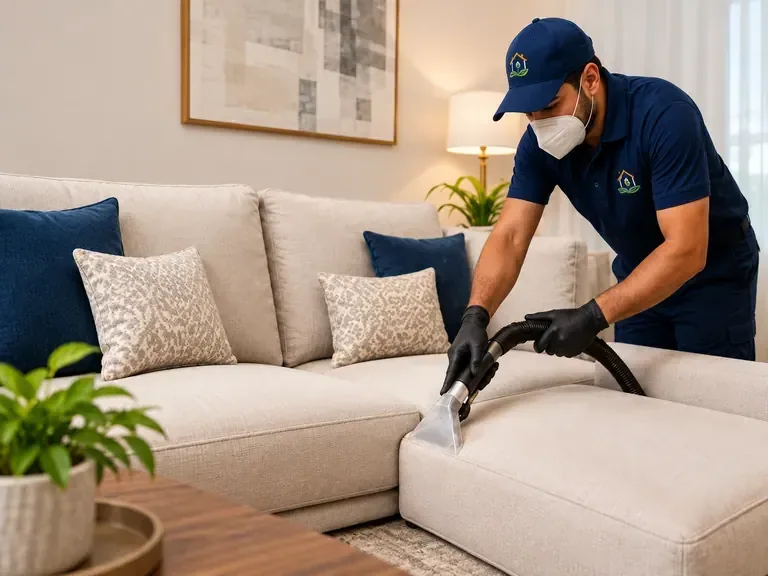

Sofa cleaning in Qatar should start with the upholstery material and the condition of the furniture. Dar Al Mahara receives requests for cleaning sofas and upholstered seating in Qatar. Describe the number of seats, the type of fabric where known and any stains or odours so that a suitable method can be considered.
Contents
Sofa cleaning in Qatar: what to include in your request
Identify the seating and your main concern, then use the item and price checklist and care-label guidance below to prepare the relevant details. The assessment should address the furniture you have and the result you need.

Preparing for the visit
Keep the agreed pieces accessible and their care information available. The room-preparation checklist covers belongings, access and the person receiving the visit.
After the service
Keep the item-specific aftercare advice with your booking record. The detailed drying plan and handover checks explain what to clarify before putting the seating back into use.

Booking and related information
For a sofa-cleaning quotation, send the seating layout, number of cushions, fabric label and photographs of the marks you want assessed. Mention detachable covers or delicate sections before agreeing on the work and a drying window. Review published prices and contact Dar Al Mahara on WhatsApp to confirm availability and the agreed scope.
You can also browse the services directory and the cleaning guides for related advice. Specialist tasks should be specified separately from general cleaning.
What to tell us about your sofa
State which item matters most and what you want assessed. If several pieces need attention, distinguish them with simple labels that you can carry through the visit and follow-up. The guide below explains the information needed for each.
Does every mark come out?
Results depend on the mark and the condition of the upholstery. The assessment should distinguish treatable soil from permanent colour change or wear before further treatment is considered.
When can the sofa be used again?
Use the seating when its item-specific aftercare requirements have been met. Mention any deadline for guests before the visit so a practical plan can be discussed.

Assess the whole sofa before focusing on one stain
A sofa is made from several parts that may not respond to cleaning in the same way. The visible cover, internal filling, cushion backing, decorative trim and frame can all affect the assessment. Start with a photograph of the entire item, then describe the area that concerns you. If the sofa has been reupholstered, tell the team whether the original label still applies. A label on an older frame may not describe replacement fabric or filling added later.

Separate an identifiable spill from a general change in appearance. For example, you may know that tea was spilled on one cushion, while another area has gradually become lighter near a window. Record what you know without assuming that both marks are removable stains. Fading, wear and dye changes can resemble dirt in photographs. The purpose of the assessment is to understand the material and realistic options before deciding on a cleaning method.
Build a clear seating inventory
List every piece and show its arrangement in photographs. A chaise, corner section, ottoman and upholstered headboard should be identified separately so their treatment and counting can be confirmed. For a sectional, explain which sides and cushions are included and whether the back can be reached. The number of bedrooms or rooms is not a seating inventory.
Dar Al Mahara’s sofa rate is QAR 35 per seat, with a QAR 200 minimum order, subject to material, condition and agreed work. For confirmed standard seating, five seats calculate as QAR 175, so the QAR 200 minimum applies; six seats calculate as QAR 210. These examples explain the rate and minimum. The actual pieces and scope must still be identified, especially with mixed shapes or additional items.
Record a fixed table, built-in unit or other obstruction that leaves part of the upholstery inaccessible. Furniture moving is not offered. Arrange it separately where needed or discuss the accessible portions before the visit. Keep the item list with the confirmed total so the review uses the same seat count and included surfaces.
Care labels and information from the supplier
Photograph the full label, not only one letter or symbol. The model’s instructions govern both the surface and how it is attached to filling, backing and trim. A missing label is a reason to seek the supplier’s information and assess the piece, rather than choose a category because a similar fabric was cleaned successfully elsewhere.
For example, Ashley Furniture Industries’ cleaning-code guide distinguishes water-based, solvent-based and dry-only care. Its upholstery instructions also restrict saturation and removal of some covers. The examples below help you understand questions about a label; use the instructions for your own furniture rather than transferring another manufacturer’s code treatment automatically.
| Label example | What it helps distinguish | What it does not establish |
|---|---|---|
| W | Specified water-based upholstery care | Permission to soak the sofa, use any steam setting or machine-wash the cover. |
| S | Specified solvent-based care and a restriction on water | A safe household solvent recipe or permission to saturate the fabric. |
| WS or SW | Specified spot-cleaning choices under that manufacturer’s instructions | Permission for every product, method or attached material. |
| X | Dry care such as the permitted vacuuming or light brushing | Permission for water- or solvent-based cleaning. |
| An explicit washable-cover instruction | Care for the identified removable cover | Permission to wash the filling, frame or another cushion’s cover. |
A zip can exist for manufacture, so do not take off a fitted cover just because it opens. Report earlier shrinkage, stiffness, colour transfer or difficulty refitting it. A loose washable throw, the fitted upholstery and the filling may be three separate care decisions even when they are on one sofa.
What to record about a recent spill
Record the substance, approximate amount, time and any response. A drink containing milk or sugar, cooking oil, cosmetics, ink and an unknown spill are different histories. Tell the team whether the liquid reached a seam, the cushion underside or the base. A dry surface mark may not describe the condition below it.
Follow the furniture manufacturer’s immediate-care instructions. Where permitted, absorb a spill promptly with a clean white cloth or plain absorbent material, without spreading it by vigorous rubbing. Do not pour on more water to make the mark visible or assume that a kitchen cleaner is suitable for upholstery. Avoid combining products and keep the original product names from anything already used.
If someone else treated the spot, ask what they applied rather than guessing. Mention any change afterwards: a larger ring, lighter colour, sticky feel or new texture. These details help distinguish the original spill from the effect of a previous treatment and support a realistic decision before further work.
Previous cleaning and existing damage
Review seams, piping, buttons, arm fronts and the areas where people sit most often. Note fraying, weak fabric, exposed filling or sagging. Cleaning can address suitable soil; it does not replace missing fibres, mend a seam or repair the frame. Show these areas before work so treatment does not proceed on the assumption that the piece is sound throughout.
Consider decorative trim and contrasting panels separately. Leather, faux leather and fabric can appear on the same item. A pile surface may show different light and dark areas as its direction changes, while worn sections may remain different after cleaning. Ask about the appropriate treatment for the exact material instead of judging all variation as a removable stain.
If the main fabric, lining or filling has been replaced, identify what you know. Previous wetting, colour transfer or an unsuccessful home wash can affect the next decision. If a repair needs attention first, record that limitation with the item rather than hiding the damage beneath a throw.
Odours need a description, not a fragrance request
Describe where the odour is strongest and when it appears. Note whether it began after a spill, storage, dampness or another event, and whether the base or surrounding room was also affected. Keep an observation separate from a guessed cause. A surface treatment may not reach material inside a cushion or resolve moisture coming from elsewhere.
Fragrance is not proof that the source was removed. Mention a leak or continued dampness so the relevant issue can be assessed, rather than repeatedly masking the smell. Ask what the proposed upholstery work can reasonably address, then report any persistent odour after the advised drying stage using the same item reference.
Prepare the area around the seating
Remove personal belongings, toys, remote controls and small loose items from the sofa and the immediate route around it. Decide which throws or decorative coverings are part of the request and which will be handled separately by the household. Keep care labels and photographs available. If someone else is receiving the visit, send them the agreed item list and explain any excluded pieces so they do not add different furniture without reviewing the change.
Show the available access route and any restrictions on parking, lifts or entry to the building. If a compound or apartment management requires an arrangement for service visits, make that arrangement before the appointment. Explain where the work is located within the property and whether another room needs to remain in use. Useful preparation is about making the agreed work accessible; it does not mean dismantling furniture or carrying heavy pieces without suitable help.
Protect the household’s use of the room
Plan alternative seating if the sofa is used throughout the day. A room can be needed by the family even when an individual item remains unsuitable for use after wet cleaning. Discuss these practical needs before choosing an appointment connected to guests or an event. Do not schedule an essential gathering on the assumption that every cushion will dry within a fixed number of hours. The fabric, filling, method and room conditions all matter.
Keep children and pets away from the active work area according to the team’s instructions. Ask about routes through the room and avoid leaving small belongings or trailing cables where equipment needs to pass. If the household cannot keep the area available, explain that limitation before the visit. It may affect the sequence or the appointment that can be offered. Clear access and realistic room use help the service proceed within the confirmed scope.
Understand the proposed treatment before it begins
Confirm the pieces, surfaces and separate cushions included, then discuss how the material restrictions affect the method. When an inconspicuous test is appropriate, ask what is being checked: colour transfer, a change in texture, reaction of a trim or another concern. A test informs the decision for that area; it does not override the label or establish that every component is identical.
Review any change since the photographs, such as a new spill or replacement cushion. Keep high-priority marks visible and discuss their realistic improvement before treatment. If an unexpected material response appears, pause for a decision rather than continuing repeated applications merely to obtain a more uniform-looking photograph.
Drying instructions should match the item
Ask which surfaces must remain exposed, how permitted loose cushions should be positioned and what room airflow is appropriate. Keep the seating clear of throws and stored items. If some cushions are fixed, do not pull at seams or try to lift them for drying. A surface that feels dry can differ from a deeper filling or an area near a seam.
Air movement and the room’s ability to release moisture both matter. Explain limited window access, air conditioning and the room layout before the visit. Outdoor humidity or dust may make an open window unhelpful, so follow the arrangement advised for the conditions. If an ordinary fan is recommended, place it securely with clear airflow and cables away from the working route.
Avoid direct heat, an unapproved dryer or another chemical as a shortcut. Do not put damp cushion covers back on, wrap the item in plastic or make it look ready for guests by covering unfinished drying areas. If the care instructions allow a removable cover to be washed separately, follow that cover’s own drying instructions too.
- Follow the agreed cushion position and room-airflow advice.
- Check the specific areas identified at handover, including seams and cushion edges as advised.
- Delay use and coverings if dampness remains or readiness is uncertain.
- Contact the team with the item reference, elapsed time and current observation if drying or odour remains a concern.
Review the result without confusing wear and dirt
Review the included items in similar lighting and from similar angles to the initial photographs. Look at the whole piece before concentrating on a mark. Texture, pile direction and light can change how a fabric appears, so describe the location and the actual change rather than relying on two photographs taken under different conditions.
- Check the agreed pieces, sides and loose cushions against the item list.
- Review the marks identified before treatment and ask what remains and why.
- Distinguish a damp area from a dry remaining mark before judging the final appearance.
- Record existing wear, fading, damaged seams or excluded material that needs another decision.
- Confirm the care instructions and what information to send for follow-up.
If a concern needs review, take an overall photograph and a close view before adding another cleaner. More rubbing is not automatically suitable. A precise item reference and location make follow-up easier than describing all the seating as one unresolved stain.
Arrange follow-up with useful information
For a follow-up concern, send the item reference, appointment date, time you noticed the change and a clear overall photograph with a close view where useful. Describe any spill, replacement cover, later cleaning or change in room conditions since the visit. Preserve the area for review rather than adding another product while the observation is unclear.
Between professional visits, follow the label’s permitted routine care. Where vacuuming is allowed, use a clean upholstery attachment gently on accessible surfaces and seams, keeping it away from weak stitching and exposed filling. Light brushing is appropriate only where the material’s instructions allow it; a method for one pile or trim is not automatically suitable for the next piece.
Check the high-use armrests and seating areas when carrying out that routine care, and deal with loose debris before it becomes embedded. Keep cleaning tools clean and dry and store the furniture’s care instructions where the household can find them. A removable throw or protector has its own label; care for it separately rather than treating it as permission to wash the fitted upholstery underneath. Ask the supplier about repairs when the fabric or seams are worn.
A concise enquiry for your own sofa
A useful message identifies the pieces, their labels and the specific concern: “One three-seat sofa and two armchairs; photographs A, B and C show the complete items. The label for A is attached, and the mark on its left cushion followed a drink spill yesterday. The pictured product was used afterwards. Please confirm the suitable work, included surfaces, total price and drying arrangements.” Replace those example quantities and events with your own facts.
For English enquiries, call 70022290 or use Dar Al Mahara on WhatsApp. Keep the final item list, quotation and care instructions together. Where several fabrics or replacement cushions are present, carry the same labels through the visit and handover so a product instruction is not assigned to the wrong piece.