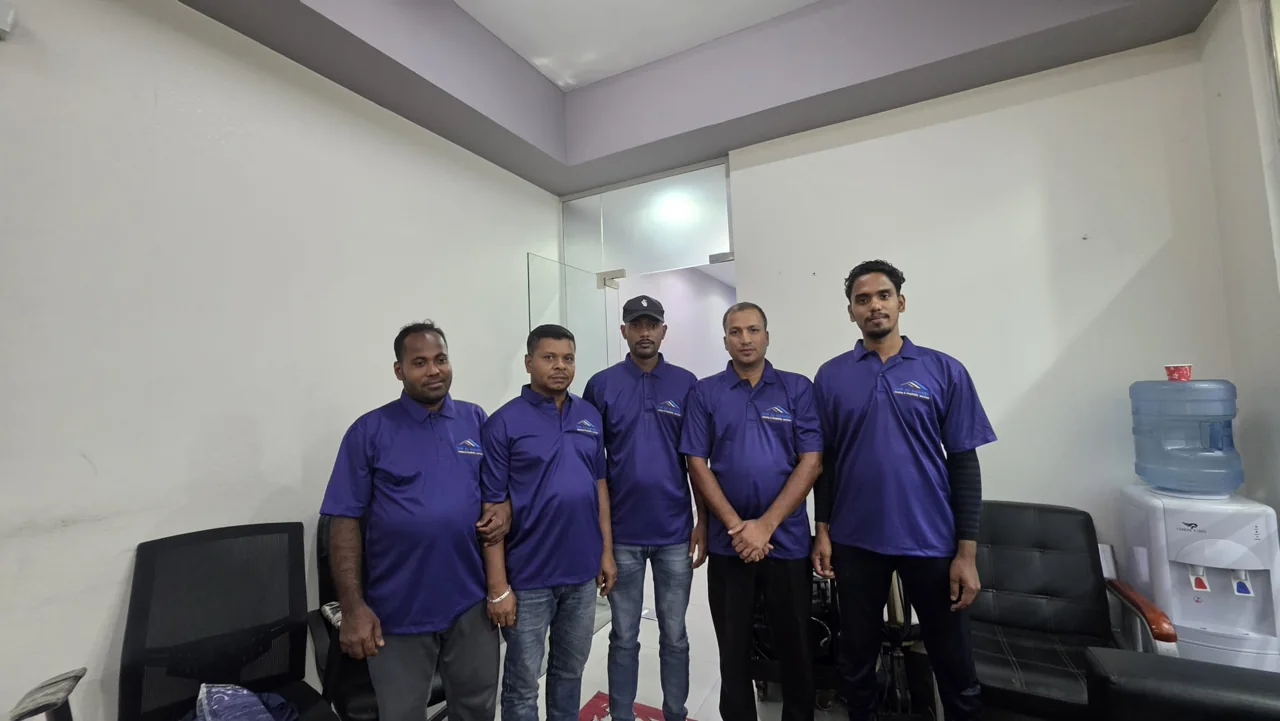
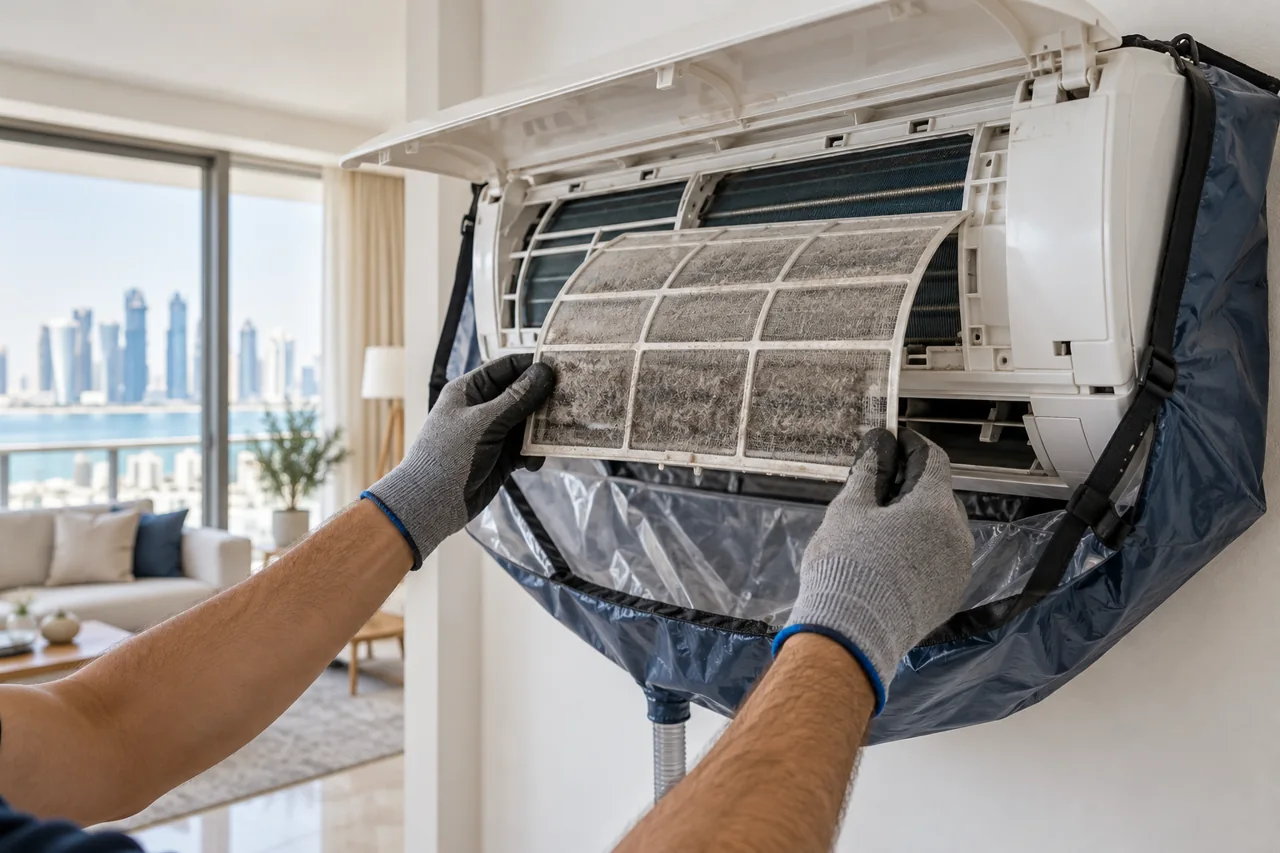
Air conditioner cleaning focuses on the accessible parts and the agreed cleaning scope for the unit. Dar Al Mahara receives requests for air conditioner cleaning in Qatar. Tell us the unit type, the number of units and whether you have noticed dust, odours, leakage or another problem so that the request can be assessed.
Contents
- Air Conditioner Cleaning in Qatar: request details
- Preparing for the visit
- After the service
- Booking and related information
- Explain the system before requesting cleaning
- What if there is leaking or weak cooling?
- What arrangements help the appointment?
- Prepare a unit-by-unit request for air conditioner cleaning
- Use a simple equipment list
- Describe symptoms without testing the equipment yourself
- Understand the QAR 100 cleaning scope
- Distinguish individual units from ductwork
- State what is above, below and around each unit
- Prepare belongings rather than equipment internals
- Coordinate an occupied home
- Coordinate an office or shared property
- Confirm what an assessment includes
- Do not choose a repair from a symptom alone
- Arrange around other property work
- Ask for a unit-specific handover
- Keep observations and service history together
- A clear final booking check
- Compare quotations using the same equipment description
Air Conditioner Cleaning in Qatar: request details
Identify the equipment and the reason for the request. Use the unit inventory to keep quantities and locations clear, and record operating concerns against the relevant unit rather than treating them as part of a general cleaning description.
Preparing for the visit
Make the agreed units accessible and leave equipment opening and isolation to the appropriate technician. The access checklist and belongings checklist explain the household’s preparation.
After the service
Keep a record of the work on each unit and the instructions received. Use the handover checklist to distinguish completed cleaning from any technical concern still needing attention.
Booking and related information
For air-conditioner cleaning, identify the unit type and number of units, access arrangements and the symptoms you have noticed. Confirm which cleaning tasks are included and ask for repairs or replacement parts to be assessed separately. Review published prices and contact Dar Al Mahara on WhatsApp to confirm availability and the agreed scope.
You can also browse the services directory and the cleaning guides for related advice. Specialist tasks should be specified separately from general cleaning.
Explain the system before requesting cleaning
A wall-mounted split unit, a window unit and a ceiling or ducted arrangement are not interchangeable descriptions. Tell the team what is present and what you want considered. If the equipment is managed by the building, ask the responsible manager for the unit references and available care information instead of opening panels to identify it.
Different parts also have different care requirements: a removable filter, plastic cover, delicate metal fins, drain components and electrical controls cannot be treated as one washable object. The model’s manual and the technician’s assessment govern permitted access, products and methods.
| Part or area | Question to clarify |
|---|---|
| User-serviceable filter | Is it washable or replaceable, and what does this model’s manual permit? |
| Cover and air outlet | Which accessible surfaces are included, and how will finishes and controls be protected? |
| Internal heat-transfer or fan areas | Does the agreed professional scope include them, with suitable access? |
| Drain-related parts | Is ordinary cleaning requested, or is a reported leak being assessed separately? |
| Ductwork and shared equipment | What separate scope and building arrangements are needed? |
Daikin’s manufacturer guidance on filter care explains the link between accumulated dust and airflow, stresses the exact model’s instructions and reserves other internal cleaning for a qualified service technician. It is a useful example of why routine filter care and a professional internal service are different; its settings and intervals are not a universal instruction for every AC.
What if there is leaking or weak cooling?
Report the observation before booking and ask whether a maintenance assessment is needed. The symptom-recording guide explains what information is useful; the complaint alone does not establish the repair.
What arrangements help the appointment?
Confirm who will open the rooms and receive the team, and give that person the current unit list. For detailed planning, see the sections on household access, occupied rooms and shared properties below.
Prepare a unit-by-unit request for air conditioner cleaning
Give each unit a reference such as “bedroom A”, “living room B” or the building’s own asset number. Record the type, location, access and reason for cleaning alongside that reference. If the type is uncertain, say so and provide an external photograph from a safe position. Do not count a grille or room as a complete unit without confirming how the system is arranged.
Separate the observations for each reference. One unit might have visible dust and no reported operating concern, while another has a new water mark. That difference helps determine which work can be discussed as cleaning and which question belongs with maintenance. Keep the same references on photographs, the quotation and the service record.


Use a simple equipment list
| Information | What to provide |
|---|---|
| Unit reference | A room or location that clearly distinguishes it from other equipment in the property. |
| Type and quantity | The known unit type and the number requested, or a photograph if the type is uncertain. |
| Access | Height, furniture below the unit, a locked room or another restriction that needs discussion. |
| Observation | Dust, an odour, leakage, noise or another concern, with an approximate starting date if known. |
| Previous work | Recent cleaning or maintenance and the parts or tasks you know were involved. |
Describe symptoms without testing the equipment yourself
Useful observations include when a sound, smell or cooling change appears; whether it affects one unit or several; and any recent cleaning, installation or building work. Note a visible error message exactly if it can be read safely. Do not repeatedly run the unit or change controls simply to recreate a symptom for a photograph.
A visible water mark should be described by location, not automatically labelled a blocked drain. Likewise, an odour does not identify a particular component or prove the unit needs a chemical treatment. If there is an apparent electrical hazard or equipment damage, avoid interfering with it and seek the appropriate maintenance help rather than waiting for routine cleaning to address it.
Understand the QAR 100 cleaning scope
The basic AC cleaning rate is QAR 100 per confirmed unit, with the equipment type, access and included components agreed beforehand. The price excludes gas, ductwork, spare parts and repairs. List any reported fault as a separate question so the cleaning price is not mistaken for a repair quotation.
For example, three confirmed units give a basic cleaning calculation of 3 × QAR 100 = QAR 300. If one of those three also has a cooling fault, the list still identifies three cleaning units and a separate fault report. It does not determine a repair price or mean that an additional component can be fitted without discussing the work and cost.
For a mixed property, a list might show two identified wall units and a third ceiling system whose scope still needs clarification. Quote the confirmed items and clarify the uncertain equipment, rather than assuming the total from the number of rooms. Keep the agreed count and component description with the price.
Distinguish individual units from ductwork
A filter is part of an individual unit’s airflow path; ductwork can serve a wider distribution system. Cleaning a visible grille or a unit does not establish that the connected ducts have been cleaned. Specify the equipment and components requested so the agreed job can be reviewed directly.
For a shared or facilities-managed system, obtain the relevant description from the building manager. Explain who can provide access and coordinate any operational arrangements. Do not open a ceiling panel or climb to identify equipment for an enquiry. If ductwork is the concern, ask for its separate scope rather than adding it to the basic unit-cleaning calculation.
State what is above, below and around each unit
Photograph the area from floor level so the height, furniture below and route around it are visible. Mention a unit over stairs, a built-in cupboard or a workstation, and note any access panel that belongs to building management. Describe the obstruction rather than creating an improvised access platform or moving a heavy item yourself.
Furniture moving is not provided; arrange any required moving separately before the visit. Point out nearby timber, fabric, painted surfaces, computers and contents that need protection. Agree which area must be clear before the visit and keep fragile or private belongings out of the work zone. If part of the equipment will remain inaccessible, have that limitation recorded before confirming that area of the scope.
Prepare belongings rather than equipment internals
Put away papers, electronics and personal items from the immediate area when instructed. Identify anything that must not be touched and provide a place for removed household belongings away from the equipment route. If a room cannot be made available, update its reference on the list rather than leaving it marked as accessible.
Do not prepare the interior with water, a spray, a brush or a cleaning mixture. Covers, filter media, fins and controls have different requirements, and the appropriate technician should decide how the agreed work can be carried out. Your preparation is the information, access and protection needed around the equipment.
Coordinate an occupied home
Tell the team which rooms will remain in use and whether someone needs to work or rest in a particular area. Ask whether the order of rooms can be arranged around those needs within the confirmed service. A preferred sequence must still allow suitable access and safe work; it does not guarantee a silent visit or uninterrupted use of every unit.
Let the booking contact know about children, pets and any practical restrictions relevant to the work area. Obtain the actual preparation and aftercare instructions and share them with the household. A person returning home after the team leaves should not have to guess which rooms or equipment are ready for ordinary use or whom to contact about an unresolved concern.
Coordinate an office or shared property
For a workplace, identify the person who can arrange entry to meeting rooms, offices and service areas. Mention working hours, customer visits, access permissions and any equipment that must not be disturbed. Cleaning a unit in a room does not authorize the team to move confidential files, unplug computers or enter a locked area without the responsible person’s agreement.
For a building with shared services, clarify who communicates with occupants and who manages any operational arrangement. Do not assume the cleaning team will notify every tenant or know the building’s internal approval process. Keep the request with a responsible manager who can answer questions and receive the service record for the identified equipment.
Confirm what an assessment includes
Ask what happens to a reported concern during the visit: is it simply recorded, or is a maintenance assessment part of the agreed request? Keep that answer against the relevant unit. If another task is proposed, ask for the observed issue, the included work and its cost or next assessment before deciding.
For example, a landlord may authorise cleaning for units A and B while asking for information about leakage from B. The person opening the property should have that instruction and a contact for further decisions. The equipment reference prevents a discussion about one unit from being interpreted as an instruction to change parts on another.
Do not choose a repair from a symptom alone
Accumulated dust on a filter can restrict airflow. Keeping the specified filter in suitable condition is useful routine care, but weak cooling can have other causes. The same observation does not prove the need for refrigerant, a component or a particular repair. Ask what the inspection actually found before choosing the next task.
Use the model’s manual to identify any user-permitted care. Some filters are washable, while other media or treatments need a different approach. Do not assume that a filter seen in a demonstration is the same as yours, or wash it because it can be removed. Internal metal fins can be delicate and sharp; leave their cleaning to the appropriate service technician.
When the manual permits a removable filter to be cleaned, follow its power-off and access precautions. The specified cleaning method and complete drying before refitting matter. This does not authorise washing an installed unit or electrical parts. If safe access or the instructions are uncertain, ask for service rather than improvising.
Arrange around other property work
Tell the team if painters, builders or other maintenance contractors will work near the equipment before or after the visit. Describe which rooms have been handed over and which remain active work areas. The sequence may need discussion so that cleaning is not immediately followed by unrelated work that changes the condition of the area.
Do not assume an earlier cleaning booking includes another visit after later construction or decoration. If the unit count, address or room access changes, ask for the current scope and quotation to be reconfirmed. Keep the responsible contractors informed about relevant instructions without asking them to alter equipment outside their own confirmed work.
Ask for a unit-specific handover
Review each reference with the responsible person. Ask which components were cleaned, what was inaccessible and what observations need follow-up. The technician should handle any agreed operational check and explain when ordinary use may resume; do not open the unit or improvise an internal inspection to verify the job.
- Match the completed work to the unit count and locations.
- Record any excluded or inaccessible component and any separate fault report.
- Ask whether a previously reported sound, leak or cooling concern still needs assessment.
- Check the immediate work area and the belongings or surfaces protected around it.
- Keep the instructions for use, routine care and the contact for a follow-up question.
A note such as “unit B: agreed filter and cover cleaning completed; earlier leak still requires maintenance review” is more useful than “all AC done”. Use the same unit reference when asking about any remaining concern. It separates an observed cleaning result from a remaining technical question.
Keep observations and service history together
Save the service date, unit references, model information, components covered and observations received. Add later installation, repair, filter replacement or relocation. If a concern returns, record when and where it appears and any work since the cleaning. This helps the next technician understand the sequence without asking you to diagnose the equipment.
Routine-care frequency should reflect the manual, operating hours and conditions. A busy unit exposed to more dust may need different attention from one used occasionally, but no single calendar interval establishes the correct professional service for every system. Keep the user-care tasks separate from internal work requiring a technician.
Share the record with a new tenant, household member or facilities contact who becomes responsible for the equipment. A previous quote belongs to its own equipment list and scope; update the description when units or access change so future care is based on the current installation.
A clear final booking check
Check the address, unit references, access, included cleaning components, any separate maintenance question, price and proposed date. For English enquiries, call 70022290. For a separate maintenance enquiry, the maintenance department is 70022290. Keep the confirmed request with the person opening the property.
A concise message might identify three units with photographs A, B and C, state that B has a water mark, and ask for the cleaning scope plus the appropriate next step for that observation. Use your actual equipment and facts. When a count or access arrangement changes, update the same list before the visit.
Compare quotations using the same equipment description
Give each provider the same equipment list, access photographs and observations. Compare the number and type of units, named cleaning components and any separate assessment. One offer for accessible covers and filters and another involving a wider internal task describe different work, even if both use the heading “AC cleaning”. Resolve the component difference before comparing totals.
For several rooms or premises, name the property and unit reference on each line. Identify who approves the cost and who will receive the work. The person who knows where the equipment is may need to contact someone else about an additional task, so give them the confirmed scope and a clear contact.
A practical comparison separates four things: the identified cleaning units, the components covered, the technical concerns requiring their own decision and the arrangements for access and handover. That makes the final record useful and keeps the choice connected to the equipment you actually have.